
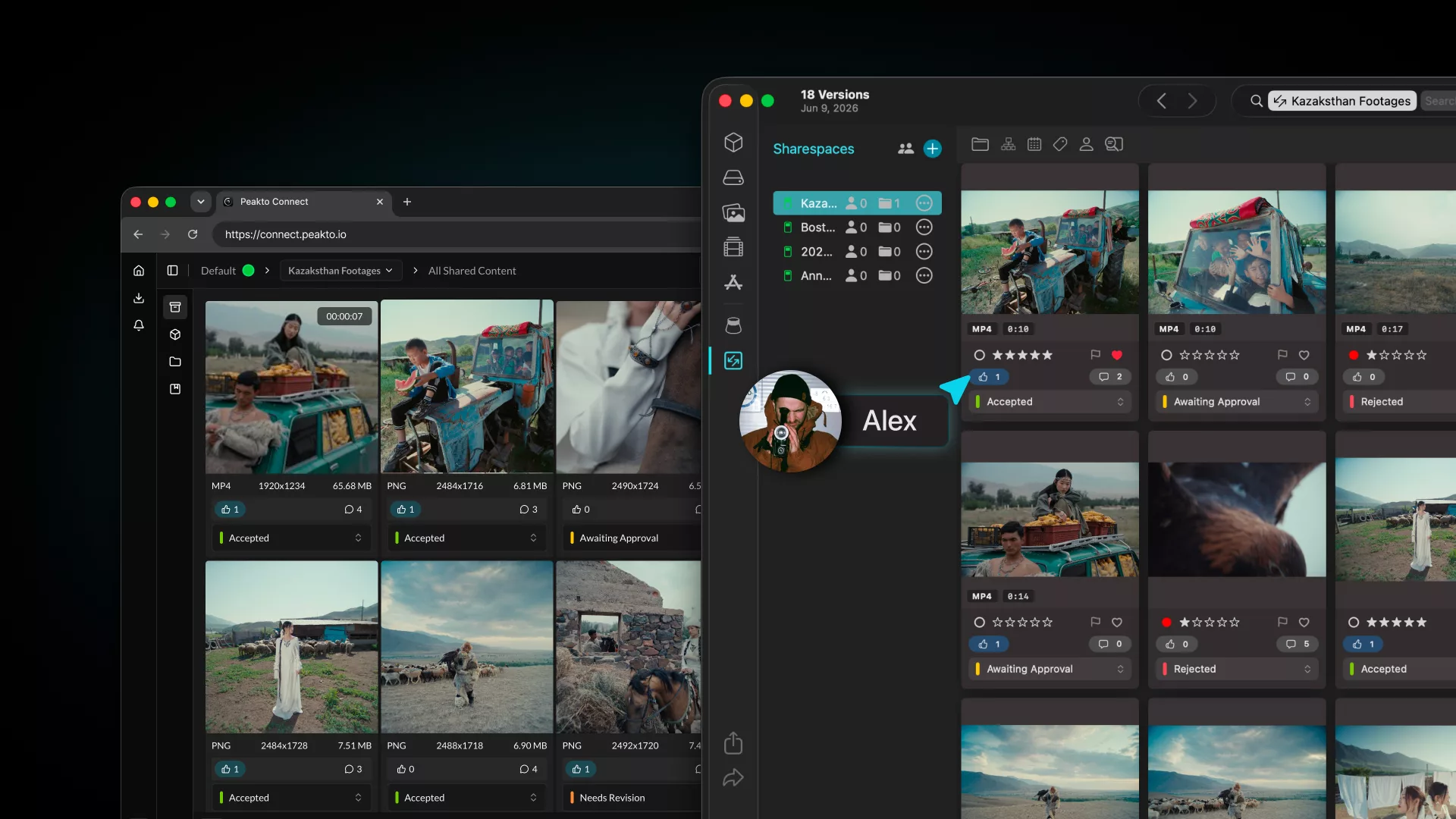
CYME today announced a major update to Peakto, its AI-powered media manager, introducing two new collaboration features designed to simplify how teams, clients, and creators work together around visual content without the cloud.
With the new Relay mode, users can securely access and share their Peakto catalog remotely without complex network configuration. At the same time, real-time synchronization between Peakto and Peakto Web ensures that every review, comment, rating, and metadata update is instantly reflected across the entire workspace.
Together, these innovations remove technical barriers and make collaboration faster, smoother, and more accessible—while keeping media stored locally on users’ own drives and NAS systems.
Locally Stored Media. Accessible Anywhere.
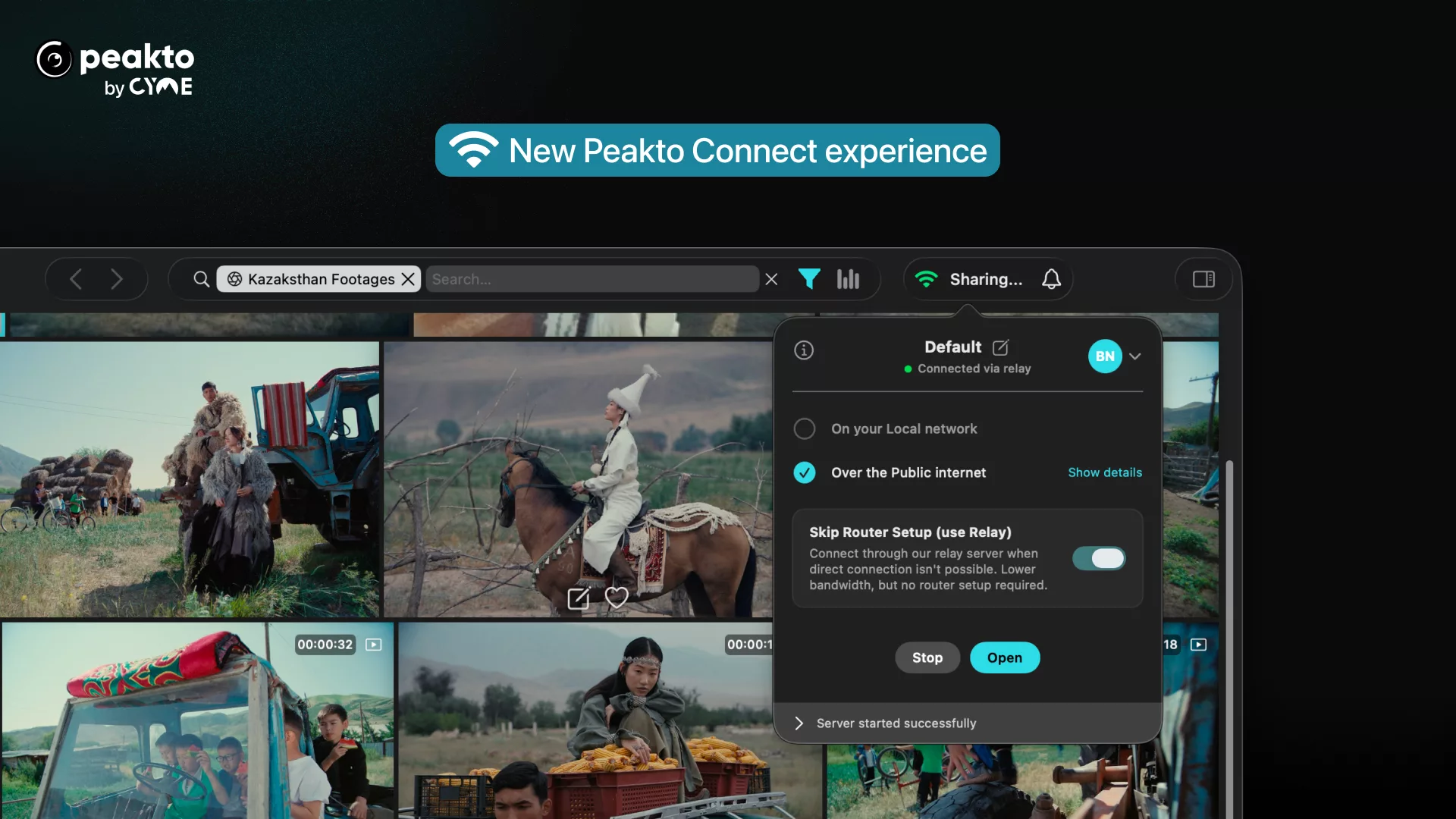
Peakto combines the simplicity users expect from cloud platforms with the privacy and security of local storage. Sharing a locally stored media library remotely used to require configuring routers, opening ports, setting up VPNs, or relying on specialized IT knowledge.
Peakto’s new Relay mode removes that complexity. Users can now securely share their Peakto catalog in just a few clicks, making media stored on local drives or NAS systems accessible to collaborators, clients, and guests from anywhere.
Real-Time Collaboration Without Compromise
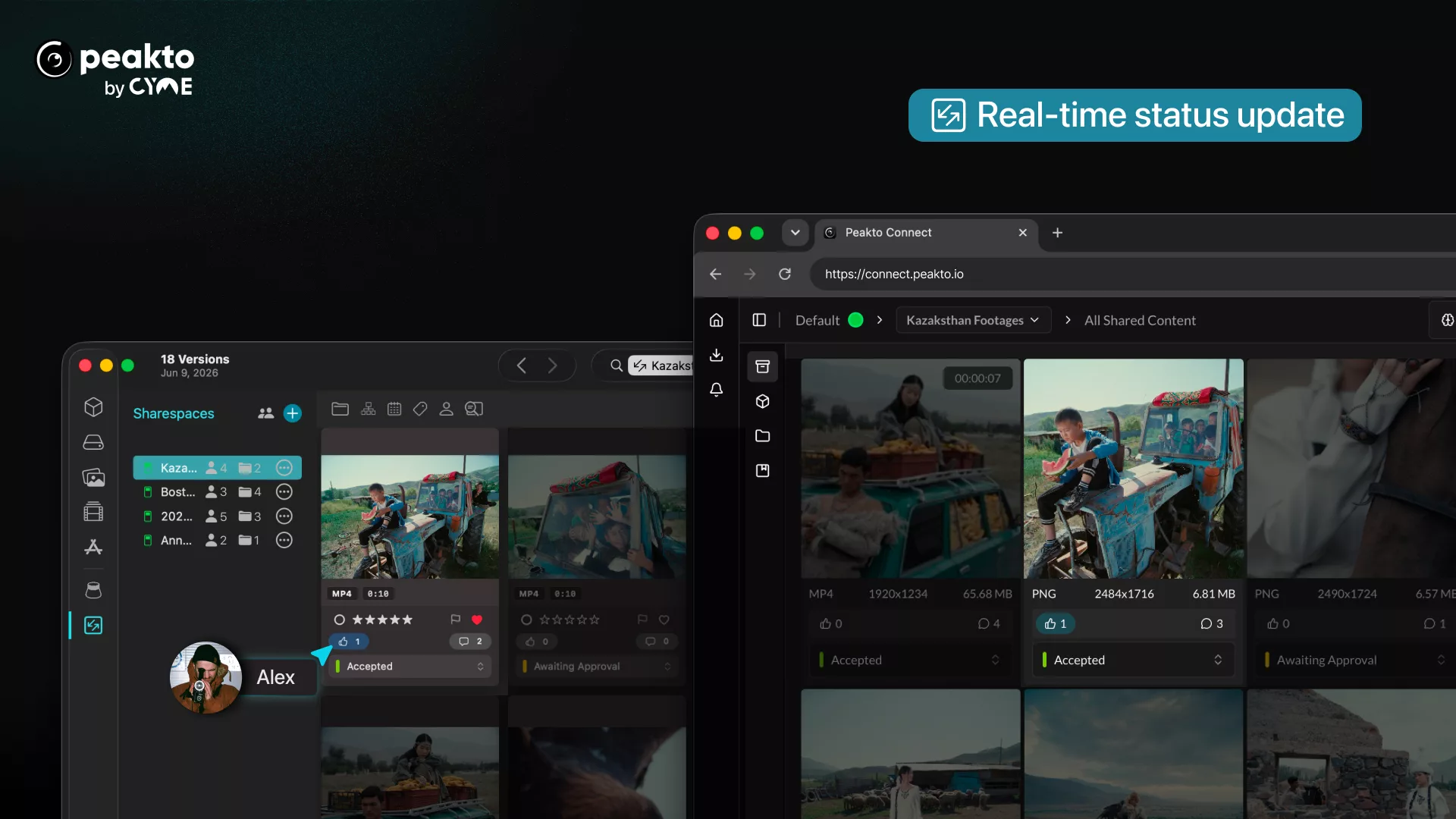
Peakto also introduces real-time synchronization for all users accessing shared content. Whether collaborators are reviewing content from a browser, validating selections, assigning star ratings, adding comments, or updating metadata, every action is synchronized instantly across the entire workspace.
Unlike cloud-first asset management platforms, Peakto follows a local-first approach. Media remains stored on users’ own infrastructure while Peakto provides secure remote access, intelligent search, and collaborative review capabilities.
For creative professionals, agencies, marketing teams, and organizations managing large visual archives, this means gaining the benefits of modern collaboration without sacrificing privacy, increasing cloud storage costs, or relinquishing control of valuable content.