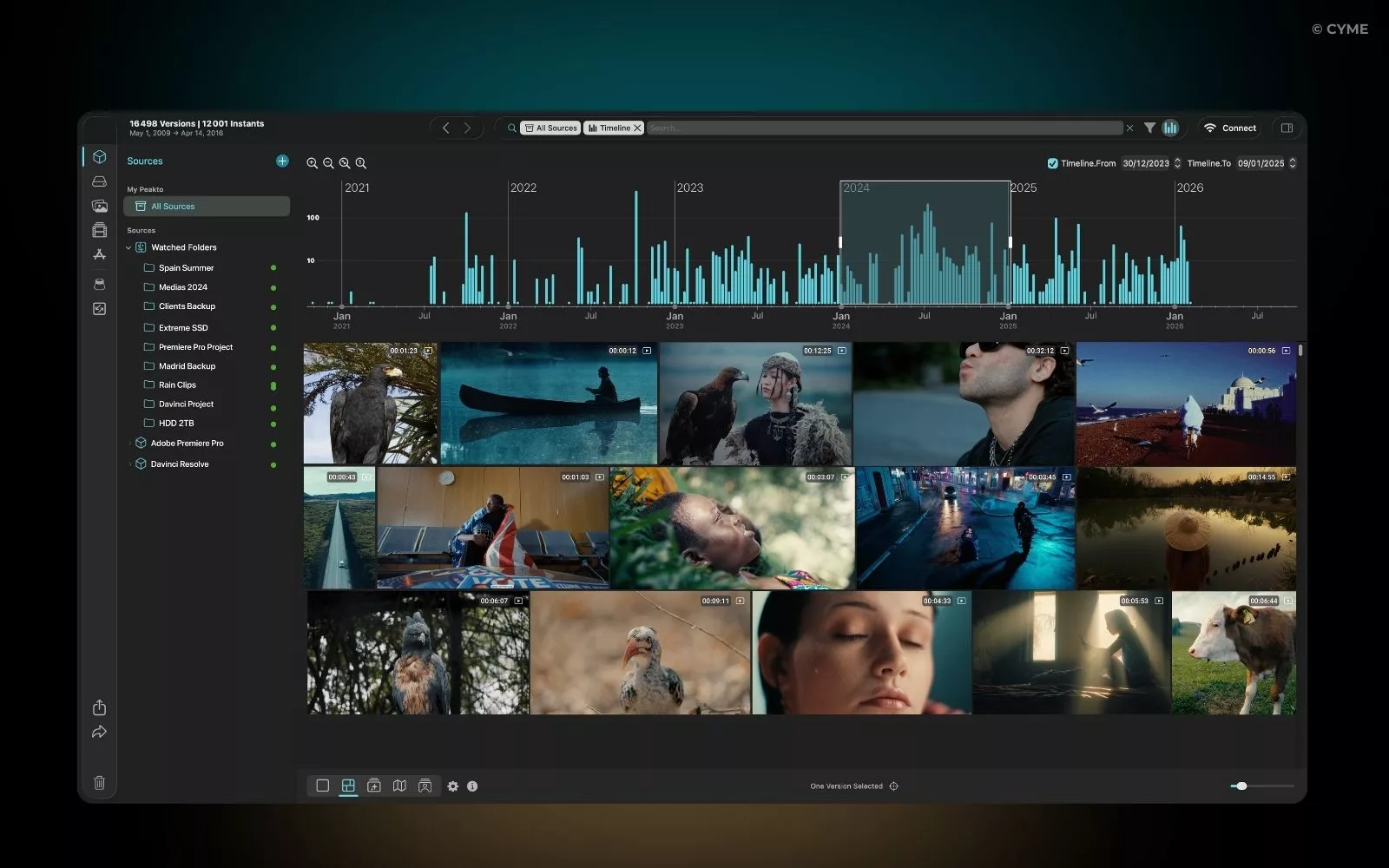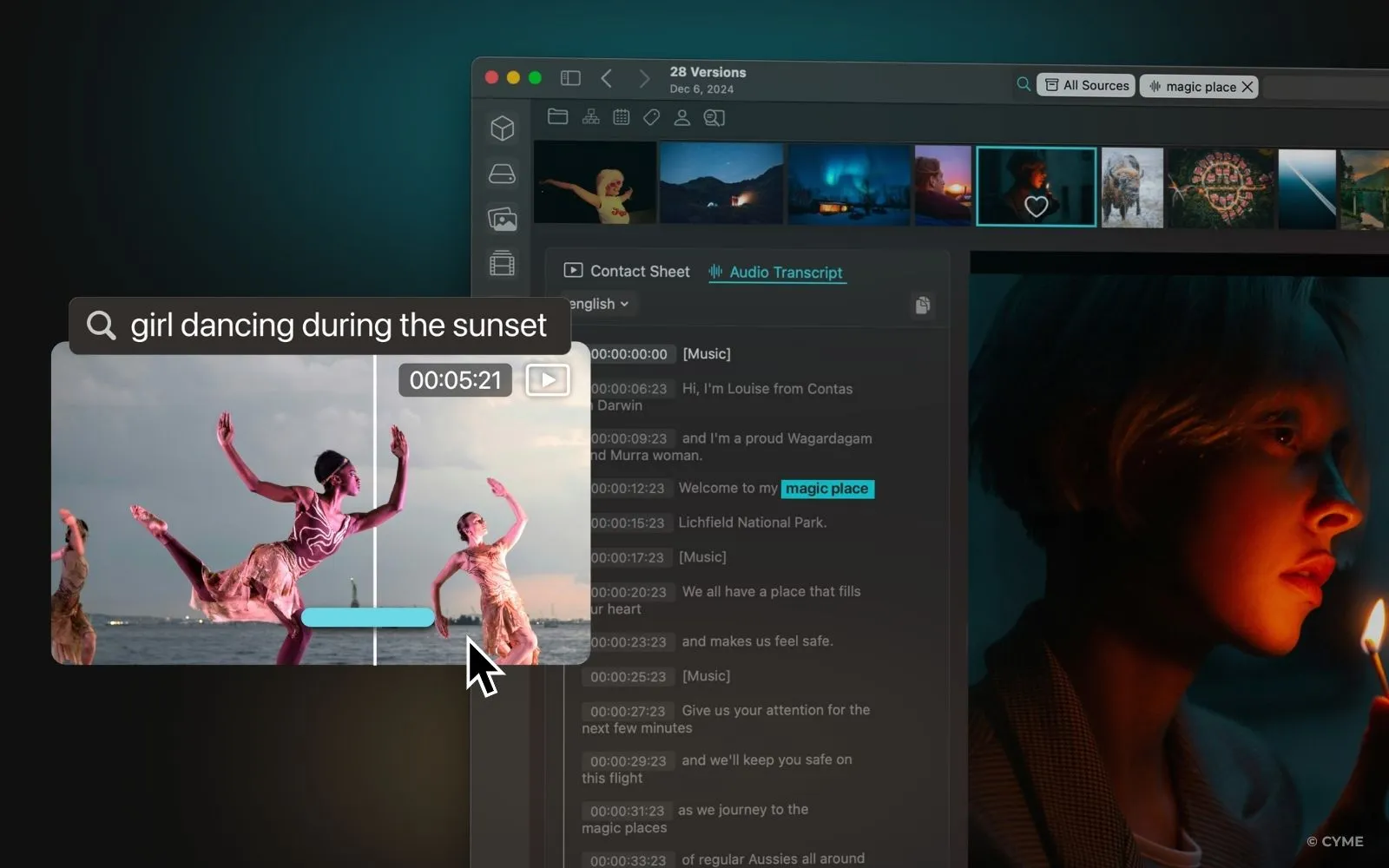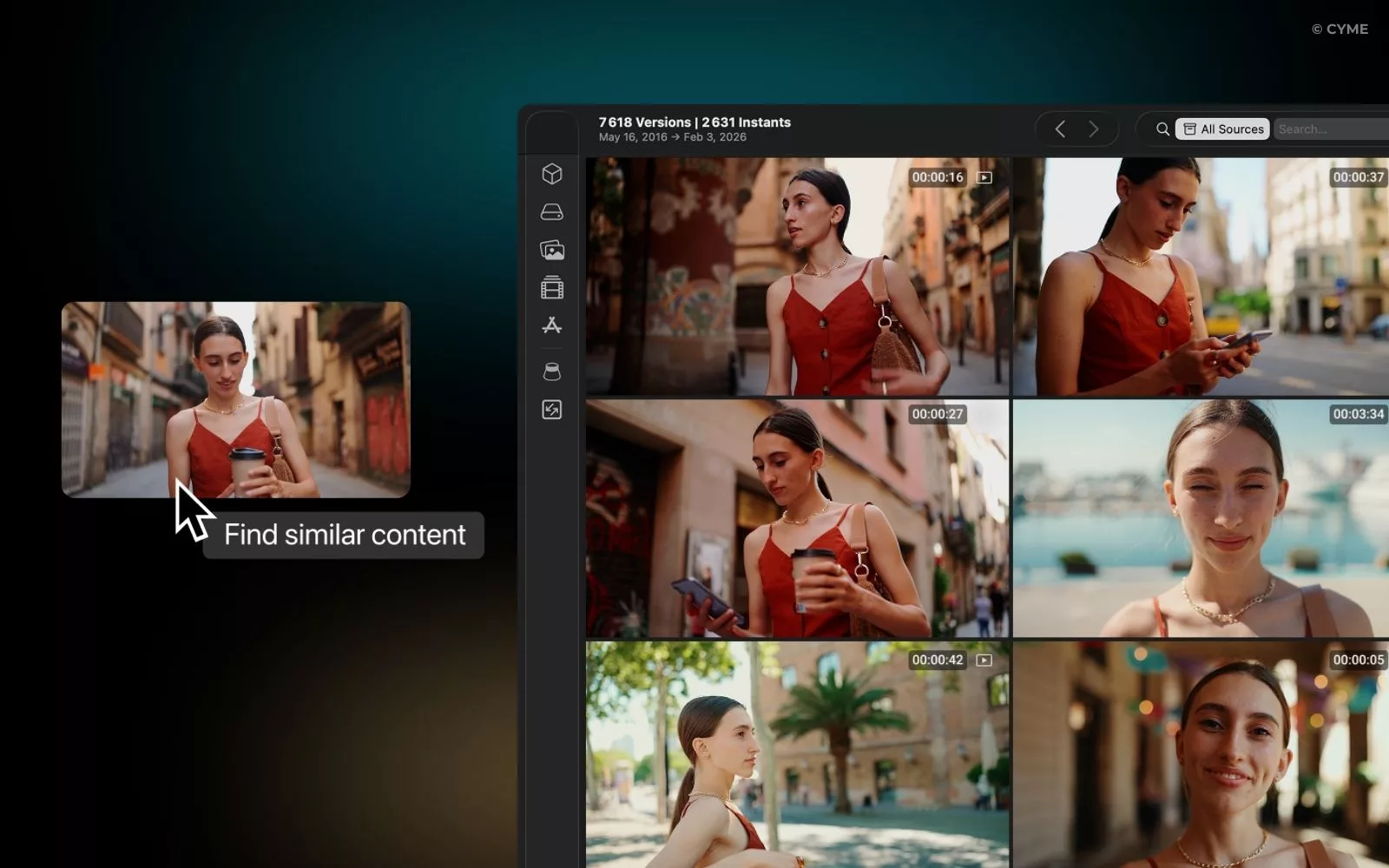
Video already represents 39% of fixed-network downstream traffic in Sandvine’s March 2024 Global Internet Phenomena Report (Sandvine). That scale makes “just run semantic search” a cost and relevance trap. Metadata filtering is how you add context (audience, rights, region, freshness) so users can actually find the right moment, not just similar words. If you also need frame-level discovery, video frame search features can complement metadata by letting users search visually inside long footage.
The 30-second summary
Metadata filtering turns video retrieval from content-blind to context-aware (rights, region, audience, format, time).
Design facets as controlled values first, then map them to filterable index fields.
Choose pre-filter, post-filter, or hybrid based on latency and recall targets.
Validate with query logs and bias checks so personalization does not narrow discovery.
Once your goal is clear, the next step is making sure your video index can actually support filtering without breaking relevance.
Prerequisites: a video index that can filter reliably
Indexing, analytics, and access control foundations
Filtering fails when metadata is incomplete, stale, or inconsistently named. That is not theoretical: over a quarter of organizations estimate losses above USD 5 million per year due to poor data quality (IBM). For video search, treat metadata as a first-class product surface, not “additional attributes that” marketing adds later.
Minimum stack: an index that keeps transcripts, thumbnails, shot boundaries, and permissions together; analytics that log applied filters; and a policy layer that makes restricted fields queryable without exposing raw values.
Technical readiness checklist before you start
- Define what gets vectorized (transcript only, captions, OCR, visual embeddings, or a mix) and what stays as strict filters.
- Inventory sources: CMS, DAM, capture pipelines, licensing, and regional release windows.
- Normalize IDs (channel, series, episode, clip) so joins are deterministic.
- Version metadata and keep a “last validated” timestamp for freshness.
- Document which fields are user-facing facets versus internal enforcement.
Key takeaways
Ship filtering only after your metadata has ownership, validation, and versioning.
Separate “hard policy filters” from “helpful UX facets” so you can iterate safely.
With a clean baseline, you can now design facets that match real video intents instead of internal taxonomies.
Map video search facets to real user intent
Intent first: learn, compare, repair, entertain
Users do not search “metadata,” they search outcomes. In Wyzowl’s dataset, 63% of people say they most like to learn about a product or service via a short video (Wyzowl). That tells you “learning” is a primary intent, and your facets must reduce time-to-answer.
Model pillars that matter for video: temporal (published, recorded, updated), audience (beginner to expert), geographic (region, language), format (tutorial, short, livestream), and authority (publisher, verified channel).
A practical facet model (and how to handle missing values)
| Facet type | Best for | Example fields | Missing-value rule |
|---|---|---|---|
| Enums | Fast, clear filtering | language, level, format | Default to “unknown,” never guess silently |
| Tags | Flexible discovery | topics, tools, techniques | Allow inferred tags, but mark provenance |
| Ranges | Time and duration | publish_date, duration_seconds | Fallback to “not filterable” if absent |
| Hierarchies | Browse journeys | category > subcategory | Map legacy categories to the nearest node |
Key takeaways
Facets should mirror user decisions, not your org chart.
Missing metadata must be explicit, otherwise you poison trust and analytics.
Once facets are defined, the core engineering work is implementing filtering so it is deterministic, fast, and auditable.
Implement metadata filtering inside the index (without killing recall)
Tagging pipeline: extract, validate, enrich, version
Think of metadata as a pipeline, not a column. You extract from the DAM, validate against controlled values, enrich (language detection, region rules), and then version each change. This is how you prevent cross-tenant leakage when one company’s licensed video must not appear in another company’s results.
If your search stack includes file search or assistants, avoid letting the model “decide” filters from natural language alone. In one community thread, marcinc marcinc described strict company-scoped retrieval; the safest pattern is still enforcing filters before generation.
Pre-filter vs post-filter vs hybrid
Sandvine reports On-Demand Streaming at 54% of fixed downstream volume (Sandvine), so wasted retrieval is a real bill. Pre-filtering reduces candidate count early. Post-filtering preserves semantic breadth but can return forbidden items unless you guard it.
| Strategy | When it wins | Main risk | Typical safeguard |
|---|---|---|---|
| Pre-filter | Hard rules (region, age, license) | Recall drops if metadata is sparse | Fallback queries with relaxed facets |
| Post-filter | Exploration and vague queries | Policy violations | Strict deny-list after retrieval |
| Hybrid | Most production video search | Complexity | Two-stage retrieval with auditing |
Flow: query → policy filters → candidate retrieval → facet refinement → reranking → final results
# Example: hybrid video retrieval with facets + semantic query
# (pseudo-API; adapt to your engine such as weaviate)
query = {
"text": "replace a bike chain without special tools",
"filters": {
"language": "en-US",
"audience_level": ["beginner", "intermediate"],
"license_region": "US",
"format": ["tutorial", "short"]
},
"hybrid": {"bm25_weight": 0.4, "vector_weight": 0.6},
"top_k": 50
}
Key takeaways
Policy filters must be deterministic and enforced before the model sees content.
Hybrid search can combine semantic retrieval and keyword precision for better control.
Want to apply this method? Start by writing your facet schema and policy rules as testable contracts.
After implementation, the biggest UX gains come from chaining filters so users converge quickly without hitting dead ends.
Chain contextual filters and queries for iterative narrowing
Wide-to-narrow filtering that adapts
Start broad (language, region, format), then tighten (level, duration, authority). When results are thin, loosen the least reliable facet first, usually inferred tags. This is how you handle questions with strict constraints while still returning something useful.
Use multimodal signals: text from transcripts, vision embeddings for scenes, audio features for music or noise. A modern index can store multiple vectors per clip to create semantic views, and this gives you better matching for “show me the moment” queries.
Cold start: defaults without bias
Wyzowl reports 85% of people have been convinced to buy after watching a video (Wyzowl), so ranking choices affect revenue and trust. For new users, default to popularity within a safe scope, then diversify across creators, regions, and topics to avoid narrowing discovery.
Key takeaways
Design filter chains that can relax automatically when metadata is missing.
Personalization must diversify results to reduce bubble effects.
As usage grows, you will feel performance pain from high-cardinality fields and expensive filtering, so cost control becomes part of relevance.
Optimize filtering performance and cost at scale
Manage selectivity, cardinality, and latency
High-cardinality fields (free-text tags, raw device models) explode your index. Prefer controlled values for facets, and keep raw strings only for debugging. Sandvine shows YouTube at 21% of mobile downstream volume (Sandvine), which is a reminder that video workloads are inherently heavy. Your cost wins come from pruning candidates early and caching popular facet combinations.
To balance precision and recall, avoid filters that are too rare (zero results) or too broad (no benefit). Partition by tenant, region, or license windows. That also helps eliminating accidental cross-scope exposure.
Abuse resistance: gaming, spam, and audits
Bad actors will manipulate tags. Keep a provenance trail (human, model, importer), run periodic audits, and downrank suspicious creators. The best tools have simple rules first, then ML scoring once you have enough data.
Key takeaways
Controlled vocabularies beat free-text tags for speed and predictability.
Partitioning reduces latency and supports compliance-driven isolation.
Even with a fast system, you still need proof that filtering improves relevance without introducing bias or brittle behavior.
Validate relevance, bias, and robustness with measurable signals
KPIs and experiments that reflect video search reality
Track precision in the top results, click-through to watch, reformulations, and “no result” rates per facet. When you change default filters or facet order, run A/B tests and segment by user intent (learn vs compare vs repair).
Microsoft reports up to 36% improvement in response relevance on complex multi-hop queries with more advanced retrieval compared to traditional RAG (Microsoft Foundry Blog). Use that as a benchmark mindset: retrieval quality is measurable, and metadata filtering is one of the few levers you can audit end to end.
Common problems and concrete fixes
| Symptom | Likely cause | Fix you can ship |
|---|---|---|
| Zero results after adding facets | Over-strict enums; sparse metadata | Add “unknown” bucket and relax least reliable facet first |
| Wrong region content appears | Post-filter only | Move region and license to hard pre-filters |
| Same creator dominates results | Popularity feedback loop | Add creator caps and topic diversification |
| Users do not use filters | Facet labels unclear | Rename facets to outcomes (“Beginner,” “Quick fix,” “US only”) |
| Unexpected sensitive snippets | Permission metadata out of sync | Reindex on ACL changes and block at retrieval time |
Key takeaways
Measure per facet, not just globally, or you will miss failure pockets.
Tight filters reduce hallucinations because the model sees fewer off-scope candidates.
FAQ: metadata filtering for video search
Which metadata fields usually improve video relevance the most?
Start with fields that users understand and that you can enforce: language, region, license window, format, and audience level. Then add authority (publisher, channel) and temporal signals (recorded date, updated date). These fields reduce irrelevant candidates before ranking, which improves precision without relying on guesswork.
Should you choose pre-filtering or post-filtering for low latency?
Choose pre-filtering for hard rules (permissions, region, age gating) because it avoids policy mistakes and shrinks the candidate set early. Use post-filtering for exploratory facets that are often missing. Most teams end up with a hybrid pipeline so they can keep recall while still enforcing strict constraints.
How do you handle missing metadata without losing good videos?
Make missingness explicit and searchable. Use an “unknown” value for enums and store provenance for inferred tags. When results are scarce, relax inferred facets first, then expand time ranges, then broaden topics. Never silently “fill” rights, region, or permission fields, because that is how compliance breaks.
What is the biggest risk of personalized facets, and how do you control it?
The biggest risk is narrowing discovery into a filter bubble. Control it by capping repeated creators, injecting diversity across regions and topics, and letting users reset to a neutral baseline. Also audit facet defaults by segment to confirm you are not systematically hiding certain creators or languages.
How do you detect and correct metadata gaming?
Detect it with anomaly checks: sudden tag spikes, mismatches between transcript and tags, and unusually high impressions with low completion. Correct it by downweighting low-trust tags, requiring controlled vocabularies for key facets, and keeping a review loop for top queries. A simple audit trail is more effective than complex heuristics.
Metadata filtering is how you turn video search into a decision engine: it narrows the candidate set using context, then lets ranking do the nuanced work. Start by defining controlled facets, enforce policy filters deterministically, and instrument every applied filter in logs. Then iterate with A/B tests and bias checks so relevance improves without hiding diversity. When you do this well, users stop “searching around” and start finding the exact clip, moment, or frame that answers their intent.